About the Journal
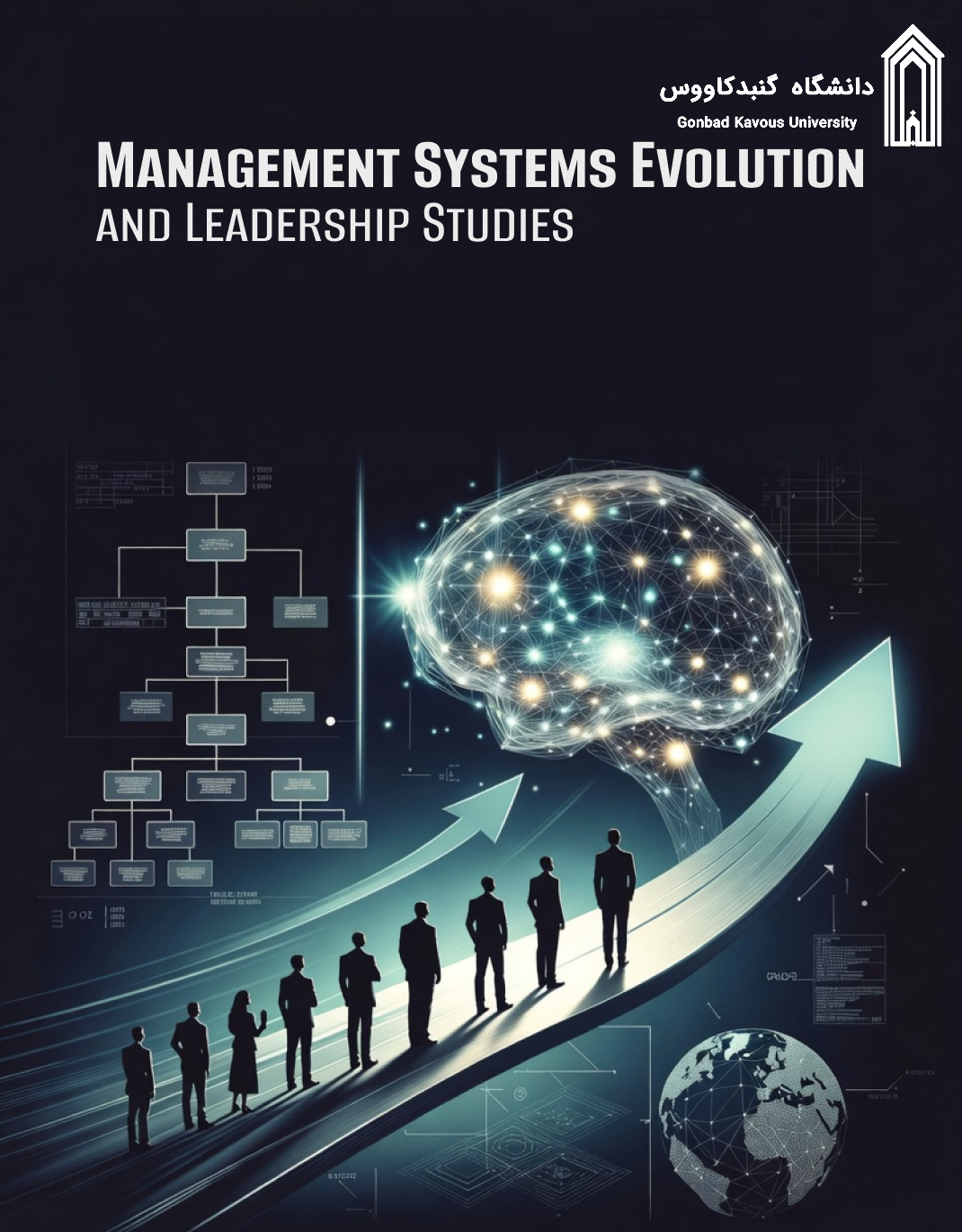
Management Systems Evolution and Leadership Studies (MSELS) is an international, scholarly, open-access journal dedicated to advancing theoretical, empirical, and applied knowledge in the fields of management systems, organizational evolution, leadership, organizational behavior, strategic management, governance, institutional development, and related areas of management and organizational studies. The journal provides a platform for researchers, academics, practitioners, policy specialists, and organizational leaders to communicate high-quality research that contributes to the understanding and development of contemporary management systems and leadership practices.
The journal recognizes that organizations operate in increasingly dynamic, complex, technology-driven, and interconnected environments. Changes in organizational structures, digital technologies, workforce expectations, institutional arrangements, sustainability priorities, governance mechanisms, and global competitive conditions continually reshape the ways organizations are managed and led. Accordingly, Management Systems Evolution and Leadership Studies encourages research that investigates how management systems develop, adapt, and transform and how leadership contributes to organizational effectiveness, resilience, innovation, learning, and sustainable performance.
MSELS welcomes original research representing diverse methodological and theoretical traditions. Quantitative, qualitative, mixed-method, conceptual, comparative, interdisciplinary, and evidence-based applied studies are considered, provided that they demonstrate academic rigor, a clear contribution to the relevant literature, and appropriate methodological foundations. The journal is particularly interested in research that connects established management theories with emerging organizational realities and identifies implications for scholarship, management practice, institutional development, and decision-making.
Management Systems Evolution and Leadership Studies is published bi-monthly, with six issues per year. Manuscripts are considered throughout the year, and accepted articles are prepared for publication according to the journal's publication schedule.
The journal follows a double-blind anonymous peer-review process. The identities of both authors and reviewers are concealed during the review process in order to support independent scholarly evaluation and reduce potential sources of bias. Normally, each manuscript that successfully passes the preliminary editorial assessment is evaluated by two or three independent reviewers with appropriate expertise in the subject area.
The journal seeks to maintain an efficient editorial and production process while preserving the standards required for scholarly peer review. Under normal circumstances, the approximate period from manuscript submission to final publication is about eight weeks, although the actual processing time may vary depending on the complexity of the manuscript, reviewer availability, the extent of revisions required, the responsiveness of authors, and editorial or production considerations.
MSELS is an open-access journal. Published articles are made freely accessible through the journal website so that researchers, students, practitioners, institutions, and other interested readers can access scholarly findings without subscription barriers. The journal regards broad accessibility, responsible dissemination, research transparency, scholarly integrity, and the international exchange of knowledge as important components of its publishing mission.
Aims and Scopes
The principal aim of Management Systems Evolution and Leadership Studies is to contribute to the development of management and leadership scholarship by publishing rigorous studies examining the formation, operation, improvement, transformation, and evolution of organizational and managerial systems. The journal seeks to create meaningful connections between management theory and organizational practice while encouraging research that addresses both established questions and emerging challenges.
A major area of interest concerns the evolution and design of management systems. The journal welcomes studies examining how organizational structures, management processes, administrative mechanisms, performance systems, decision-making arrangements, governance structures, and organizational capabilities change over time. Research may investigate organizational adaptation, institutional change, management innovation, organizational redesign, process improvement, quality management, knowledge systems, organizational learning, resilience, agility, and the development of new management models.
Another central focus is leadership and its role in organizational and institutional development. Relevant research may examine leadership theories, leadership styles and behaviors, strategic leadership, transformational and transactional leadership, ethical leadership, servant leadership, authentic leadership, distributed leadership, digital leadership, entrepreneurial leadership, sustainable leadership, team leadership, and other established or emerging leadership approaches. The journal is interested not only in leadership at the individual level but also in leadership as an organizational, relational, institutional, and social phenomenon.
The scope of the journal also extends to strategic management and organizational performance, including research on strategic planning, strategy implementation, competitive advantage, strategic capabilities, organizational effectiveness, performance management, strategic decision-making, organizational resources, dynamic capabilities, innovation strategies, and organizational responses to environmental uncertainty. Studies examining how leadership and management systems interact to influence strategic outcomes are particularly relevant.
MSELS encourages research concerning organizational behavior and human resource management where such research contributes to the journal's broader focus on organizational systems and leadership. Appropriate subjects may include employee engagement, organizational commitment, organizational culture, organizational climate, motivation, workplace behavior, psychological empowerment, talent management, human resource development, teamwork, conflict management, organizational citizenship behavior, employee well-being, workplace relationships, and leadership–employee interactions.
The journal is also interested in the transformation of organizations resulting from digitalization, technological development, and innovation. Studies may address digital transformation, artificial intelligence in management, data-driven decision-making, digital organizational structures, virtual and hybrid work, technological leadership, management information systems, organizational innovation, knowledge management, technology adoption, and the managerial consequences of emerging technologies. Research in this area should clearly demonstrate its relevance to management systems, organizational development, leadership, or strategic decision-making.
Another important dimension of the journal's scope concerns governance, ethics, responsibility, and sustainability. Research addressing corporate governance, organizational accountability, ethical management, responsible leadership, stakeholder management, corporate social responsibility, environmental management, sustainable organizational development, ESG-related management practices, and the integration of sustainability into strategy and organizational systems is welcomed.
Because management and leadership operate within broader economic, social, institutional, and cultural environments, the journal also encourages comparative and interdisciplinary scholarship. Studies comparing organizations, industries, countries, institutional environments, management models, or leadership practices can provide valuable insights into the contextual nature of management. Contributions drawing appropriately on psychology, sociology, economics, public administration, information systems, entrepreneurship, organizational communication, education management, and related disciplines are therefore considered when they maintain a clear connection with the journal's central fields.
The journal publishes research from private, public, nonprofit, educational, entrepreneurial, industrial, service, and other organizational contexts. Both national and international studies are welcomed. There is no restriction to a particular geographic region, organizational size, industry, or methodological tradition.
Manuscripts should offer a recognizable scholarly contribution. This contribution may involve theoretical development, empirical evidence, methodological advancement, critical synthesis, comparative insight, practical implications, or the application of established theories to emerging organizational conditions. Regardless of the specific subject, submissions should be clearly situated within the relevant literature and should explain how their findings advance understanding within management systems, leadership studies, or closely related areas.
Open Access Statement
Management Systems Evolution and Leadership Studies is committed to the principles of open-access scholarly publishing. All articles published by the journal are made freely and permanently available to readers through the journal website, subject to the terms of the applicable publication license.
Readers are not required to purchase individual articles or maintain a subscription in order to access published content. This policy is intended to facilitate the broad circulation of academic knowledge and enable researchers, students, practitioners, organizations, policymakers, and members of the wider scholarly community to benefit from published research regardless of institutional subscription arrangements.
Open access can increase the visibility and accessibility of scholarly work by reducing financial barriers between authors and readers. The journal therefore seeks to support the dissemination, discussion, citation, and legitimate reuse of research while respecting authors' intellectual property rights and the conditions established under the journal's publication license.
Published articles are accessible through the official journal website and may also be deposited or shared by authors in accordance with the journal's self-archiving policy and the conditions of the Creative Commons Attribution-NonCommercial 4.0 International License (CC BY-NC 4.0).
The journal's open-access policy does not affect its editorial standards. All submissions are evaluated according to scholarly merit, methodological quality, relevance, originality, ethical standards, and contribution to the journal's scope. Payment of an article processing charge does not guarantee acceptance, influence editorial decisions, or alter the peer-review process.
Copyright and License
Authors publishing in Management Systems Evolution and Leadership Studies retain full copyright in their work. Submission or publication in the journal does not require authors to transfer ownership of their copyright to the journal.
By publishing an article, authors grant the journal the necessary right to publish, distribute, display, archive, and make the accepted work available as part of the journal's scholarly publication activities. Authors remain the copyright holders and may use their published work in accordance with the journal's licensing and self-archiving policies.
Articles are published under the Creative Commons Attribution-NonCommercial 4.0 International License (CC BY-NC 4.0). Under this license, users may copy, share, distribute, and adapt published material for non-commercial purposes, provided that appropriate credit is given to the original author or authors, the original source of publication is properly acknowledged, a reference to the applicable Creative Commons license is provided, and any modifications to the original material are indicated where appropriate.
The license enables legitimate academic and educational reuse while protecting published work against unauthorized commercial exploitation. Examples of generally permitted non-commercial uses include academic teaching, personal research, scholarly presentations, institutional repositories, non-commercial research projects, and the preparation of derivative academic materials, provided that proper attribution and all relevant license requirements are observed.
Authors are responsible for ensuring that any copyrighted material belonging to third parties—including figures, photographs, extensive extracts, instruments, tables, or other protected content—is used with appropriate authorization where permission is legally required. Publication under a Creative Commons license does not override copyright held by third parties in material that is separately identified as belonging to another rights holder.
Unless otherwise indicated, the CC BY-NC 4.0 license applies to the original scholarly content published by the journal.
Plagiarism
Management Systems Evolution and Leadership Studies is committed to maintaining high standards of academic integrity and regards plagiarism, inappropriate duplication, and other forms of unethical textual appropriation as serious violations of responsible scholarly practice.
Submitted manuscripts may be screened using iThenticate plagiarism-detection and similarity-checking software. Similarity screening may be conducted during the initial editorial evaluation and may also be repeated at later stages when necessary, particularly when substantial revisions have been made or concerns regarding originality arise.
Similarity percentages are not interpreted mechanically. A similarity report may contain legitimate matches resulting from references, methodological terminology, commonly used academic expressions, names of institutions, legal or technical terminology, appropriately quoted material, or an author's earlier publications. For this reason, editorial decisions are based not solely on an overall similarity percentage but also on the nature, extent, location, and scholarly significance of individual matches.
Authors must appropriately cite and acknowledge all ideas, data, interpretations, wording, figures, tables, and other material derived from previous sources. Directly reproduced wording should be presented in accordance with appropriate quotation and citation practices. Paraphrased ideas must also be properly attributed to their original sources.
The journal also considers self-plagiarism or inappropriate text recycling when substantial portions of previously published work are reused without appropriate acknowledgment or when a manuscript substantially duplicates an author's earlier publication without a legitimate scholarly justification. Authors should transparently disclose closely related publications and manuscripts where necessary.
When potentially problematic similarity is detected before publication, the editorial office may request an explanation, require correction or revision, reject the manuscript, or take other appropriate action depending on the seriousness of the issue. Cases suggesting broader research misconduct may be examined in accordance with recognized principles of publication ethics.
If plagiarism or substantial unattributed duplication is discovered after publication, the journal may investigate the matter and take appropriate corrective action, which may include publication of a correction, editorial notice, or retraction where warranted by the circumstances.
Article Processing Charges (APCs)
Management Systems Evolution and Leadership Studies applies an Article Processing Charge (APC) of 3,000,000 Tomans for articles accepted for publication.
The APC contributes to the costs associated with journal administration, editorial management, manuscript processing, peer-review coordination, technical preparation, online publication, website maintenance, digital hosting, archiving, and open-access dissemination.
The APC is associated with accepted manuscripts only. Submission of a manuscript does not itself guarantee publication, and editorial decisions are made independently of payment considerations. Manuscripts are evaluated according to their academic quality, relevance to the journal, methodological rigor, originality, ethical compliance, and the results of the peer-review process.
Payment of the APC cannot be used to accelerate, bypass, or influence peer review. Editors and reviewers assess manuscripts according to the same scholarly standards regardless of financial considerations.
Authors are informed of relevant payment procedures after the manuscript has successfully completed the required editorial and peer-review stages and has been accepted for publication.
The journal seeks to maintain transparency concerning publication charges. Therefore, the applicable APC should be communicated clearly to authors before the final publication process so that authors are aware of the journal's publication costs and conditions.
Peer-Review Process
Management Systems Evolution and Leadership Studies operates a double-blind anonymous peer-review system. Under this model, reviewers do not receive identifying information about the authors, and authors are not informed of the identities of reviewers. The purpose of this procedure is to encourage independent evaluation based on the scholarly quality of the manuscript and to reduce potential personal, institutional, professional, or reputational influences on the assessment process.
Following submission, each manuscript first undergoes an initial editorial assessment. At this stage, the editorial team examines whether the submission falls within the journal's aims and scope, meets basic scholarly and structural requirements, demonstrates sufficient academic relevance, complies with ethical and editorial policies, and possesses an appropriate level of originality and methodological quality to justify external review. Manuscripts that clearly fall outside the scope of the journal or do not meet fundamental academic requirements may be declined without external peer review.
Manuscripts that successfully complete the initial assessment are normally sent to two or three independent reviewers with expertise relevant to the subject and methodology of the submission. Reviewers are asked to evaluate aspects such as the originality and importance of the research question, theoretical foundations, engagement with existing literature, appropriateness of the research design, methodological rigor, validity of analysis, interpretation of findings, organization and clarity of presentation, adequacy of conclusions, ethical considerations, and the overall scholarly contribution of the manuscript.
Based on the reviewers' evaluations and the editor's assessment, a manuscript may receive an editorial decision such as acceptance, acceptance subject to revision, minor revision, major revision, or rejection. The final decision remains the responsibility of the journal's editorial authorities, who consider reviewer reports alongside the manuscript's overall academic merit and compliance with journal policies.
When revision is requested, authors should respond carefully to reviewer and editor comments and submit a revised manuscript together with an appropriate explanation of the changes made. Revised manuscripts may be returned to the original reviewers or assessed editorially, depending on the extent of the revisions and the issues raised during the previous review stage.
A request for revision does not constitute a guarantee of eventual acceptance. The manuscript must satisfactorily address the substantive concerns identified during evaluation before a final acceptance decision can be made.
Reviewers are expected to treat manuscripts as confidential scholarly documents and to conduct evaluations objectively, constructively, and professionally. They should avoid using unpublished information obtained through peer review for personal or professional advantage and should disclose circumstances that may create significant conflicts of interest.
Editors similarly seek to maintain confidentiality and editorial independence throughout manuscript evaluation. Decisions should be based on academic merit, relevance, methodological quality, ethical standards, and contribution to knowledge rather than the author's identity, institutional affiliation, nationality, or other irrelevant considerations.
The journal aims for an efficient editorial process. Under normal circumstances, the approximate period from initial submission to publication is around eight weeks. This represents an approximate processing period rather than a guaranteed deadline. Manuscripts requiring extensive revision, additional review, ethical clarification, or substantial technical correction may require additional time. Reviewer availability and the speed with which authors submit requested revisions can also affect the publication timeline.
Following final acceptance, manuscripts proceed to the production stage, which may include editorial preparation, formatting, proofreading, metadata preparation, and final online publication according to the journal's publication schedule.
Archiving and Repository Policies
Management Systems Evolution and Leadership Studies recognizes the importance of preserving published scholarly content and ensuring that research remains accessible over time. The journal therefore maintains published articles through its official journal website, where journal issues and individual articles constitute the journal's principal online publication archive.
Published material is organized and retained as part of the journal's permanent scholarly record. The journal seeks to preserve the bibliographic and publication information associated with its articles so that readers can identify, retrieve, and cite the scholarly works published in MSELS.
The journal also supports author self-archiving. Because authors retain copyright in their work, they may archive and share their articles in accordance with the conditions of the journal's CC BY-NC 4.0 license and applicable journal policies. Authors may make appropriate versions of their work available through personal academic webpages, institutional repositories, university repositories, subject-based academic repositories, and other legitimate non-commercial scholarly platforms.
Where the final published version is deposited, authors should provide complete bibliographic acknowledgment of its original publication in Management Systems Evolution and Leadership Studies and, where available, include an appropriate link or persistent identifier directing readers to the journal version.
Self-archived copies should preserve the integrity of the scholarly record. Authors should clearly identify the version being deposited where relevant and should not present substantially modified material as though it were identical to the formally published journal version.
The purpose of the journal's repository and self-archiving policy is to increase legitimate access to scholarly work, improve research visibility, support institutional and academic preservation practices, and facilitate the long-term dissemination of research without diminishing the role of the journal's official published version as the version of record.
Through the combination of journal-based archiving and author self-archiving, MSELS seeks to promote accessibility, preservation, and responsible dissemination of the research it publishes.